
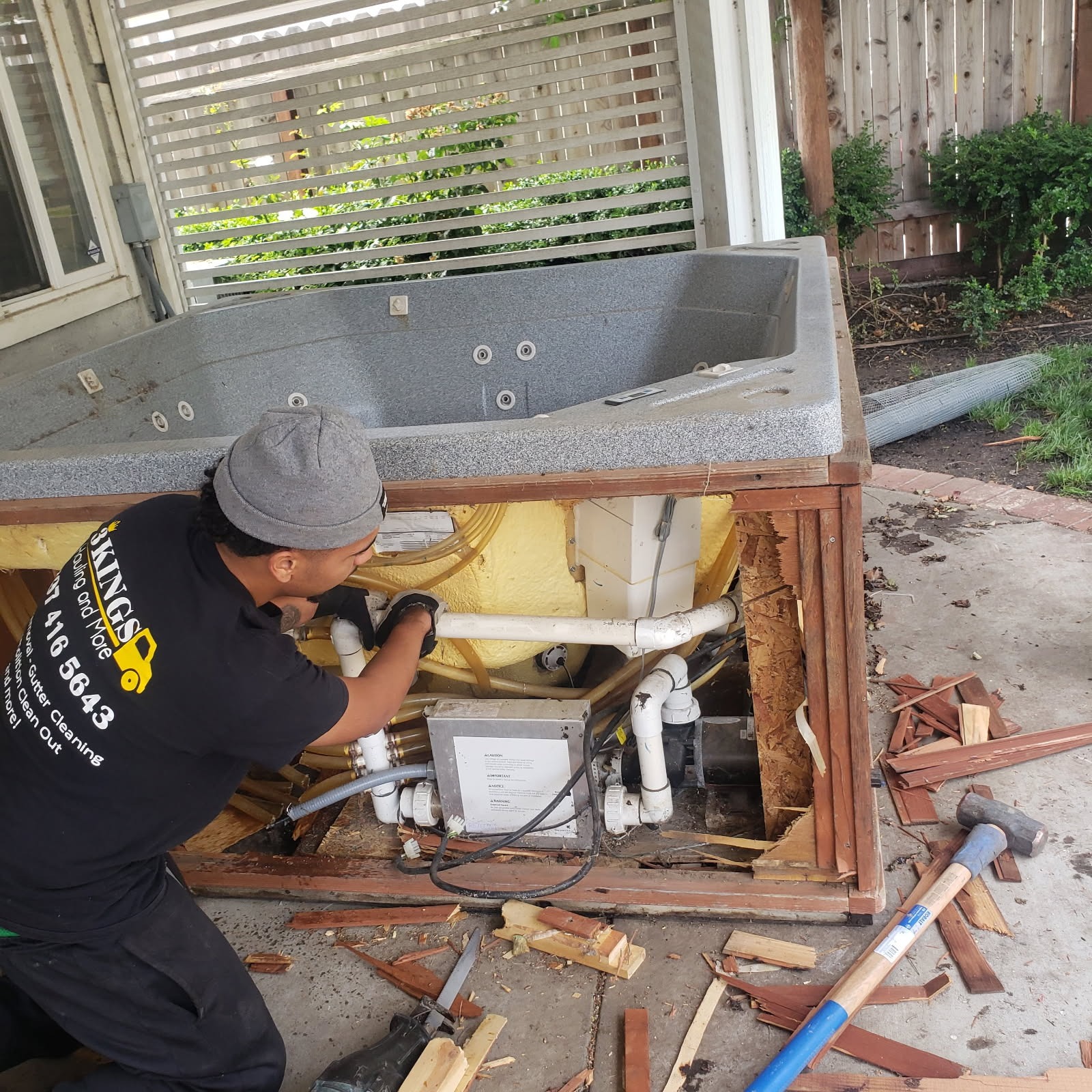
A cracked patio slab, a sunken patch of lawn, or torn up sod are common results when homeowners try to remove a hot tub on their own. The tub itself is usually the easy part. Protecting the yard around it is where most attempts go wrong. This guide covers what backyard hot tub removal actually involves, where damage tends to start, and how to keep your yard intact from start to finish.
Why Backyard Damage Happens During Hot Tub Removal
Most damage comes from moving heavy materials across grass, gravel, or pavers without a plan. Acrylic shells, wood cabinets, and metal frames are bulky and awkward to carry. Dragging pieces instead of lifting them tears up sod and cracks hardscaping nearby.
Water drainage adds another risk. Dumping hundreds of gallons in one spot can flood a lawn or erode soil around the base of the unit. Without a drainage plan, removing an old hot tub can leave behind more mess than the tub itself did while it was in use.
What Removing an Old Hot Tub Actually Involves
Draining and Disconnecting Power and Plumbing
Before any cutting starts, the tub needs to be drained completely and disconnected from its electrical and plumbing lines. Skipping this step is a safety hazard and often the reason DIY removals stall halfway through. Hardwired connections should be handled by a licensed electrician, not guessed at.
Breaking Down the Structure
Once drained, the outer cabinet and frame come apart first, followed by the shell itself. Fiberglass and acrylic shells are usually cut into sections so they can be carried instead of dragged. This is where hot tub demolition gets physical, and where inexperienced handling causes the most damage to grass and hardscaping.
Can Hot Tub Demolition Be Done Without Digging Up the Yard
It depends on how the unit was installed. A hot tub sitting on a reinforced deck or concrete pad is far easier to remove than one set into the ground with plumbing buried underneath. In ground installations usually require some digging, though it can often be limited to a small area around the plumbing connections.
Laying plywood sheets or protective boards across the lawn before equipment moves through keeps foot traffic from compacting soil or tearing grass. This one step prevents a large share of the damage seen after a rushed removal.
Steps That Protect Your Lawn and Landscaping
Protecting the lawn starts with covering the removal path with boards or tarps before any tools or equipment come through. Cutting the shell into smaller sections directly on the tub’s original footprint, rather than dragging it whole across the yard, limits contact with soil and grass.
Filling in depressions left behind with topsoil right after removal stops erosion before it starts. Reseeding or laying sod over the old footprint within a few days keeps bare patches from becoming a longer term problem once the tub is gone.
When Hot Tub Disposal Requires Special Handling
Hot tub disposal is not as simple as setting materials on the curb for pickup. Most municipal trash services will not take acrylic shells, foam insulation, or wiring components. These materials need to go to a facility equipped to separate and process them correctly.
Older units sometimes contain insulation or electrical parts that require extra care during disposal. Asking how a company plans to dispose of these materials matters just as much as asking how they plan to remove the tub itself.
Why Professional Hot Tub Removal Services Reduce Risk
Professional hot tub removal services bring equipment built for the job, including dollies, protective flooring, and cutting tools sized for shell material. That equipment is often the difference between a clean removal and a yard left with gouges and flattened grass.
Experience matters too. A crew that has handled many removals can often tell how a tub was installed just by looking at it, which shortens the job and cuts down on guesswork. Old hot tub removal frequently uncovers surprises like buried wiring or unexpected concrete, and an experienced crew adjusts without causing extra damage to the surrounding area.
How Long Backyard Hot Tub Removal Usually Takes
A straightforward removal from a deck or patio typically takes two to four hours, including draining, disconnection, and hauling. In ground units or tubs with buried plumbing can take longer, sometimes a full day, depending on how much digging is required.
Weather and access also affect timing. A tub in a tight side yard or behind a fence gate takes longer to remove than one with a clear path to a driveway or street.
What to Ask Before Hiring Removal Help
Before booking professional hot tub removal, confirm whether the price includes disposal fees, yard protection steps, and cleanup once the tub is gone. Some companies charge separately for hauling debris to a disposal site, which can change the total cost by a noticeable amount.
It also helps to ask how the crew plans to protect existing landscaping, irrigation lines, and fencing near the tub. A clear, specific answer is usually a good sign the company has done this work enough times to know where problems tend to start.
Final Thoughts
Removing a hot tub without damage comes down to preparation, the right equipment, and understanding how the unit was installed before work begins. Rushed removals are where lawns, patios, and irrigation lines get damaged most often. Whether the job is handled by a homeowner or a hauling crew, following the right sequence keeps the yard in the same shape it started in.
If your hot tub has become more trouble than it’s worth, 3 Kings Hauling & More handles the disconnection, breakdown, and disposal so your backyard stays intact from start to finish. Reach out for a quote before your next yard project begins.